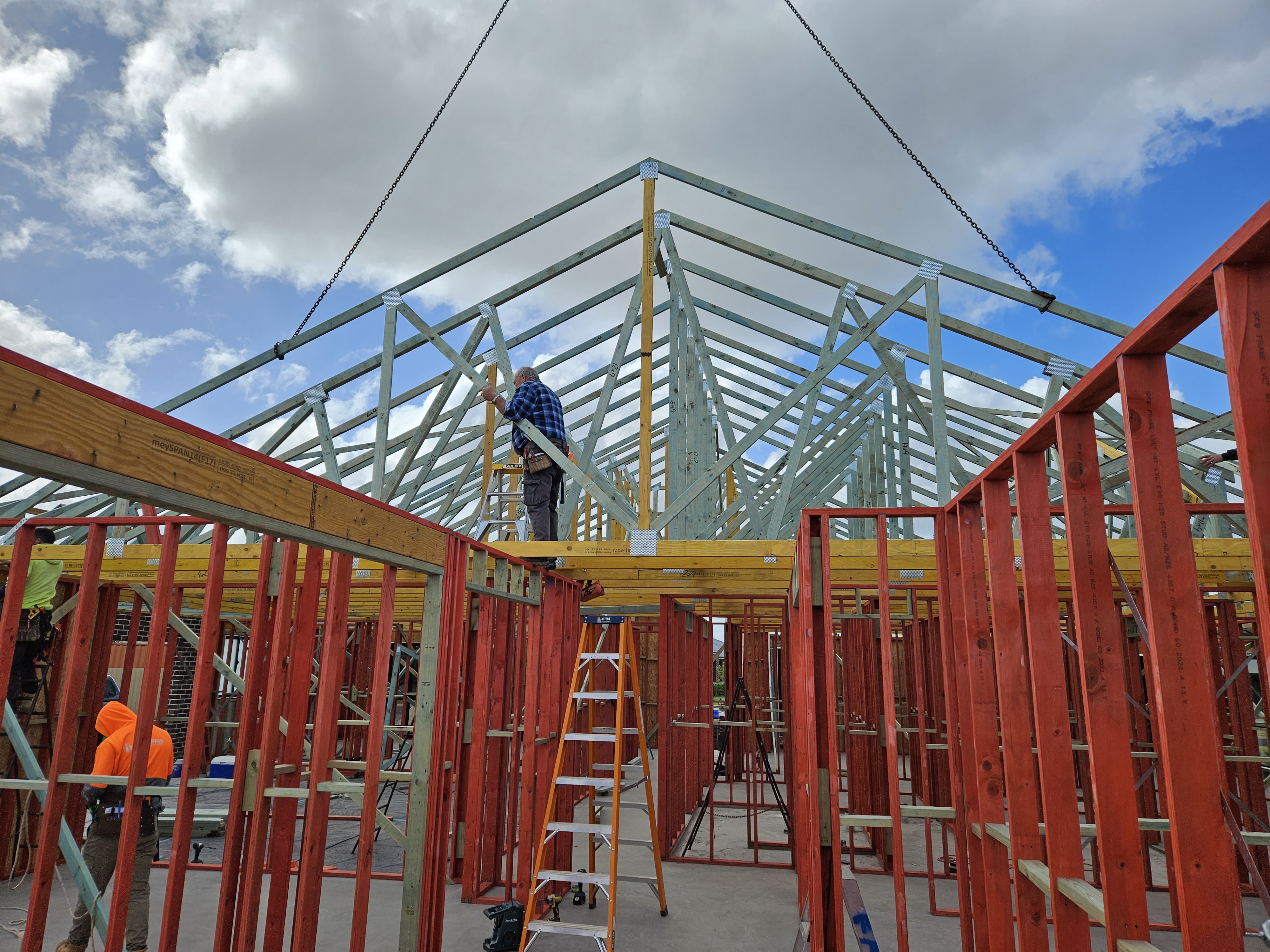
Sponsoring Carpenters in Australia: Employer Guide
If you run a building business in Australia right now, you already know the problem.
There’s plenty of work, but not enough carpenters.
With the national housing shortage and a large construction pipeline, many builders say the same thing:
Any carpenter with capacity can usually find more work than they can handle.
At the same time, the workforce pipeline is shifting.
Industry workforce reports show construction trades have a median age in the mid-40s, and a significant portion of experienced carpenters are approaching retirement age. Meanwhile, fewer young people are entering the trade compared with previous decades.
For some builders, recruiting from overseas has become part of long-term workforce planning.
This guide explains how that process generally works, what employers should know, and why many construction businesses start planning earlier than they used to.
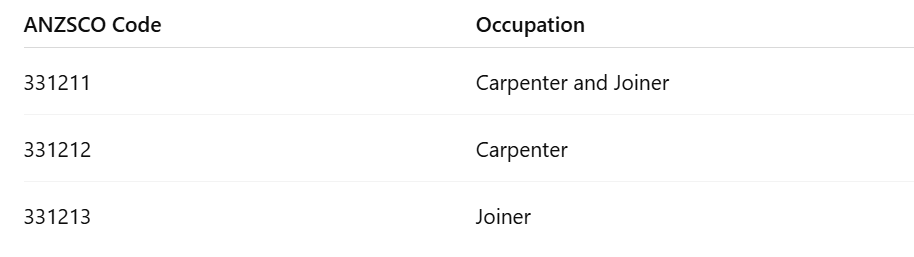
Carpenter Occupations in ANZSCO
Carpentry occupations are grouped under ANZSCO Unit Group 3312 – Carpenters and Joiners.
Common roles include:
Typical responsibilities include:
timber framing
roof structures
formwork
finishing carpentry
renovation work
structural timber installation
Many carpenters specialise in particular areas.
Residential carpenters
Often work on:
house frames
decks and pergolas
renovations
roof framing
Commercial carpenters
More likely to focus on:
formwork
commercial structures
large building projects
concrete systems
Civil or structural carpenters
May work on:
bridges
engineered timber systems
major infrastructure projects
On most Australian sites, teams include carpenters with different strengths working together.
Is Carpentry on Australia’s Skilled Occupation Lists?
Yes - and this is good news for employers.
Carpenter (ANZSCO 331212) sits on the Medium and Long-term Strategic Skills List (MLTSSL).
This means:
• It is recognised as a national skills shortage occupation
• It is eligible for temporary skilled migration programs
• It can lead to long-term employer sponsorship pathways
Importantly, this occupation is not restricted to regional concessions only.
Regional employers may have additional migration options available, but carpentry itself is recognised as a national shortage.
The Main Employer Sponsored Visa Pathways
Australia’s employer sponsorship framework includes several visa programs used by construction businesses.
The most commonly discussed pathways include:
Skills in Demand Visa (Subclass 482)
Formerly known as the Temporary Skill Shortage (TSS) visa, this program was restructured in late 2024 and is now called the Skills in Demand (SID) visa.
It allows Australian employers to sponsor skilled workers for temporary employment.
Skilled Employer Sponsored Regional Visa (Subclass 494)
This program is specifically designed for regional employers.
It allows regional businesses to sponsor skilled workers in eligible occupations.
Employer Nomination Scheme (Subclass 186)
A permanent residency visa used by employers for long-term skilled workers.
Permanent Residence (Skilled Regional) Visa (Subclass 191)
Workers who hold certain regional visas may later become eligible for permanent residency through this pathway after meeting residency requirements.
These programs exist to help businesses address verified skill shortages while maintaining Australian labour standards.
Important Planning Factor: Minimum Salary Threshold
Employer sponsored migration programs generally include a minimum salary threshold requirement.
This threshold is known as the Temporary Skilled Migration Income Threshold (TSMIT).
At the time of writing it is $76,515 per year.
For construction businesses that operate with:
seasonal work patterns
labour hire arrangements
variable rosters
this threshold can be an important planning consideration.
Where Do Overseas Carpenters Usually Come From?
Builders who recruit overseas carpenters often see candidates from several regions.
Common source countries include:
United Kingdom
Ireland
South Africa
Philippines
parts of Europe
parts of Southeast Asia
New Zealand carpenters
New Zealand carpenters are worth mentioning separately.
Their training systems, construction methods and safety standards are very similar to Australia, making them some of the easiest tradespeople to integrate into Australian building teams.
Many Australian builders have historically recruited New Zealand carpenters for this reason.
Who Assesses Overseas Carpenters?
The official assessing authority for carpentry trades is:
Trades Recognition Australia (TRA).
TRA assesses whether an overseas worker’s skills are broadly comparable with Australian trade standards.
Assessments can involve:
qualification checks
employment evidence
technical interviews
practical trade assessments
The Hidden Bottleneck: Skills Assessment Timeframes
Many employers assume visa processing is the slowest step.
In reality, the skills assessment stage is often the longest part of the process.
Workers must gather:
employment evidence
references
qualifications
trade documentation
from previous employers — often across multiple countries.
Indicative preparation timeframes may include:
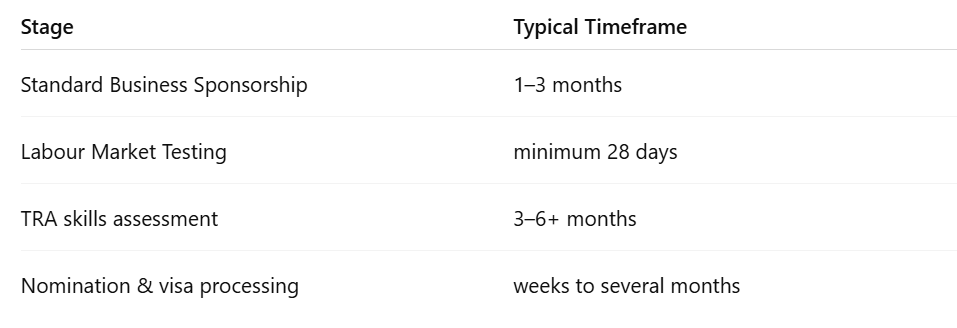
From a cold start, many businesses allow 9-18 months for the full process.
This is why many experienced employers treat overseas recruitment as workforce planning rather than an emergency fix.
Regional Employers and DAMAs
Some regions operate Designated Area Migration Agreements (DAMAs).
These are labour agreements designed to help regional economies address workforce shortages.
Construction trades frequently appear in DAMAs.
Examples include agreements operating in areas such as:
Northern Territory
South Australia
parts of regional Victoria
Orana region in NSW
other regional economic zones
Employers typically check with their regional authority to confirm what occupations and concessions apply locally.
How Overseas Carpenters Fit into Australian Building Teams
Builders often find the cultural transition on site is smoother than expected.
Construction sites worldwide tend to operate with similar principles:
teamwork
safety procedures
respect for supervision
practical problem solving
During the first few months workers may adapt to:
Australian building codes
WHS systems
local terminology
materials such as engineered timber
Once that adjustment occurs, many employers report overseas carpenters integrate into teams just like any other tradesperson.
What Happens if the Worker Leaves?
A common concern among employers is investing time and resources into sponsorship only for the worker to leave.
Employer sponsored roles generally involve formal nominations linking the worker to a specific employer and occupation.
If a worker wishes to move to another employer under certain visa programs, new nominations and approvals are typically required.
Regional visa holders may also have regional residency requirements.
Understanding these rules helps employers plan workforce arrangements with greater confidence.
Practical Questions When Recruiting Overseas Carpenters
When interviewing overseas carpenters, it can help to focus on questions relevant to Australian construction methods.
Examples include:
Tell us of times you worked with timber framing systems similar to those used in Australia?
Are you experienced using pneumatic framing nailers and nail gun systems?
Have you worked with engineered timber products such as LVL or Glulam?
Are you familiar with metal roofing systems such as Colorbond?
Have you participated in structural frame inspections on building projects?
Can you read architectural and engineering drawings used on construction sites?
These questions help identify candidates who can adapt quickly to Australian job sites.
One Good Hire Often Leads to More
An interesting pattern many employers observe is that one successful overseas hire often leads to more referrals.
Tradespeople frequently maintain strong networks with former classmates or colleagues.
Once a worker settles successfully into an Australian workplace, they often recommend the opportunity to other skilled tradespeople they trust.
For some businesses, this creates a pipeline of experienced workers over time.
The Big Picture for Builders
Australia’s construction sector faces a structural workforce challenge.
Demand for housing remains high
Experienced tradespeople are retiring
Apprenticeship numbers fluctuate
Builders who plan their workforce early often have more options available to them.
For some construction businesses, overseas recruitment becomes part of the long-term strategy to keep projects moving.
Glossary of Key Terms
ANZSCO
Australian and New Zealand Standard Classification of Occupations.
TRA
Trades Recognition Australia, the official trade skills assessing authority.
TSMIT
Temporary Skilled Migration Income Threshold, the minimum salary floor for certain employer sponsorship pathways.
SBS
Standard Business Sponsorship approval allowing employers to sponsor workers.
LMT
Labour Market Testing showing efforts to recruit locally.
Nomination
The process where an employer formally identifies the role being sponsored.
DAMA
Designated Area Migration Agreement used to address regional labour shortages.
Related Articles
Related Articles that you may enjoy
https://auvisas.au/post/becoming-a-business-sponsor
https://auvisas.au/post/common-visa-mistakes
https://auvisas.au/post/labour-market-testing
https://auvisas.au/post/costperday
Source: AU Visas Employer Guide Series
Disclaimer
The content provided is for informational purposes only and does not constitute immigration or legal advice. It is subject to change. Consult a MARA-registered migration agent or lawyer for professional advice before making any application.
👉 Contact AU Visas today for a professional opinion on your situation. https://auvisas.au/free-consult for business.


