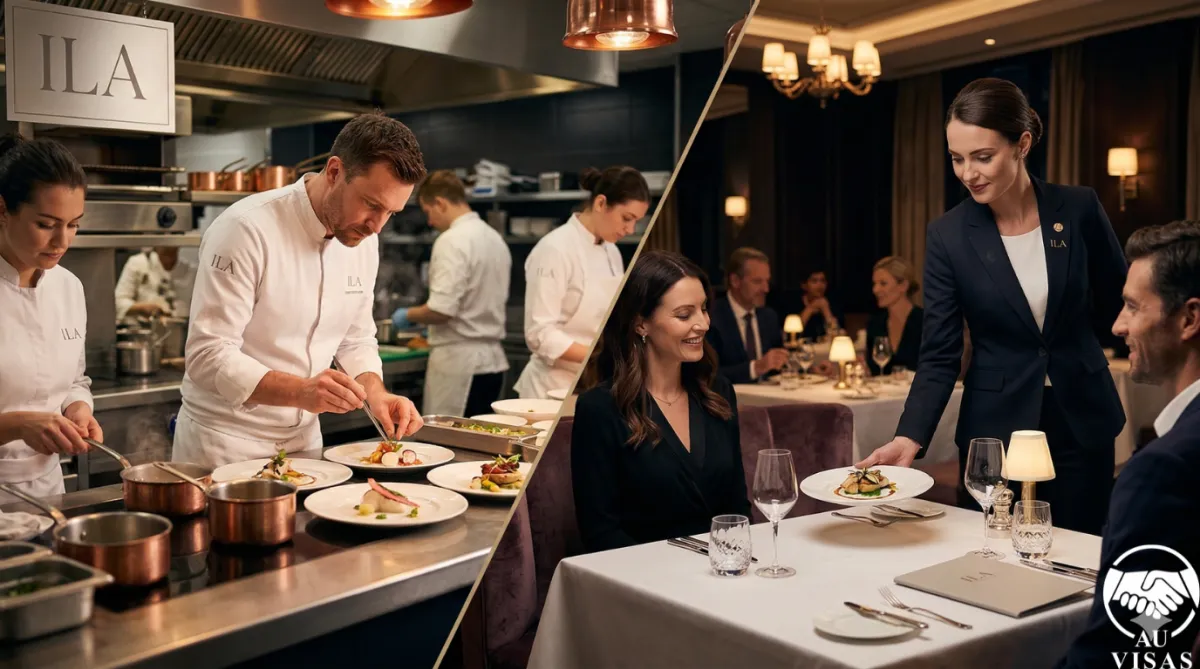
ILA Restaurant (Premium): A Practical Guide for Restaurants, Cafés and Hospitality Employers
If you run a restaurant, café or hospitality venue in regional Australia, you already know the real challenge is getting the needed staff.
One regional restaurant owners wife recently confided: she was covering the floor herself, on off days, because staff kept dropping out - while still trying to keep her day job and look after a young child.
She’d heard about sponsoring chefs.
But she hadn’t heard about the Restaurant (Premium Dining) Industry Labour Agreement at all.
That’s not unusual.
And more importantly - it’s not just about chefs.
For the right venue, this pathway can cover:
This guide breaks it down in plain English — what it is, who it suits, how it compares to other options, and where cafés and bakeries fit into the picture.
What Is the ILA Restaurant (Premium) Pathway?
The Restaurant (Premium Dining) Industry Labour Agreement is a hospitality-specific labour agreement framework.
From an employer perspective:
👉 It’s a structured pathway for premium venues
👉 It includes specific hospitality occupations
👉 It operates under the labour agreement stream of sponsorship
It was designed to address shortages in:
qualified chefs
experienced kitchen staff
premium front-of-house service roles
venue leadership
What Does “Premium” Actually Mean?
This is the most important filter - and where many businesses get caught out.
A Premium Dining establishment is generally described as:
non-franchised
at least ~$2M+ annual revenue
offering a wine list
employing experienced staff
requiring specialised front-of-house and kitchen roles
Practical reality
👉 This is not aimed at every café or takeaway
👉 It is aimed at higher-end, structured hospitality operations
What Occupations Are Included?
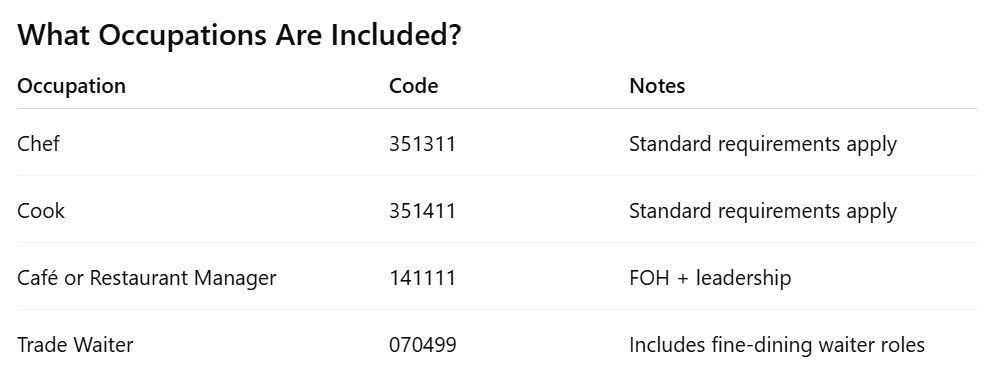
Trade Waiter includes:
Sommelier
Wine Steward
Formal / Silver Service Waiter
👉 This is where the pathway becomes particularly valuable for premium venues.
Can It Be Used for Front-of-House Staff?
Yes — in the right roles.
The pathway includes:
Café or Restaurant Manager
Trade Waiter (including sommelier-style roles)
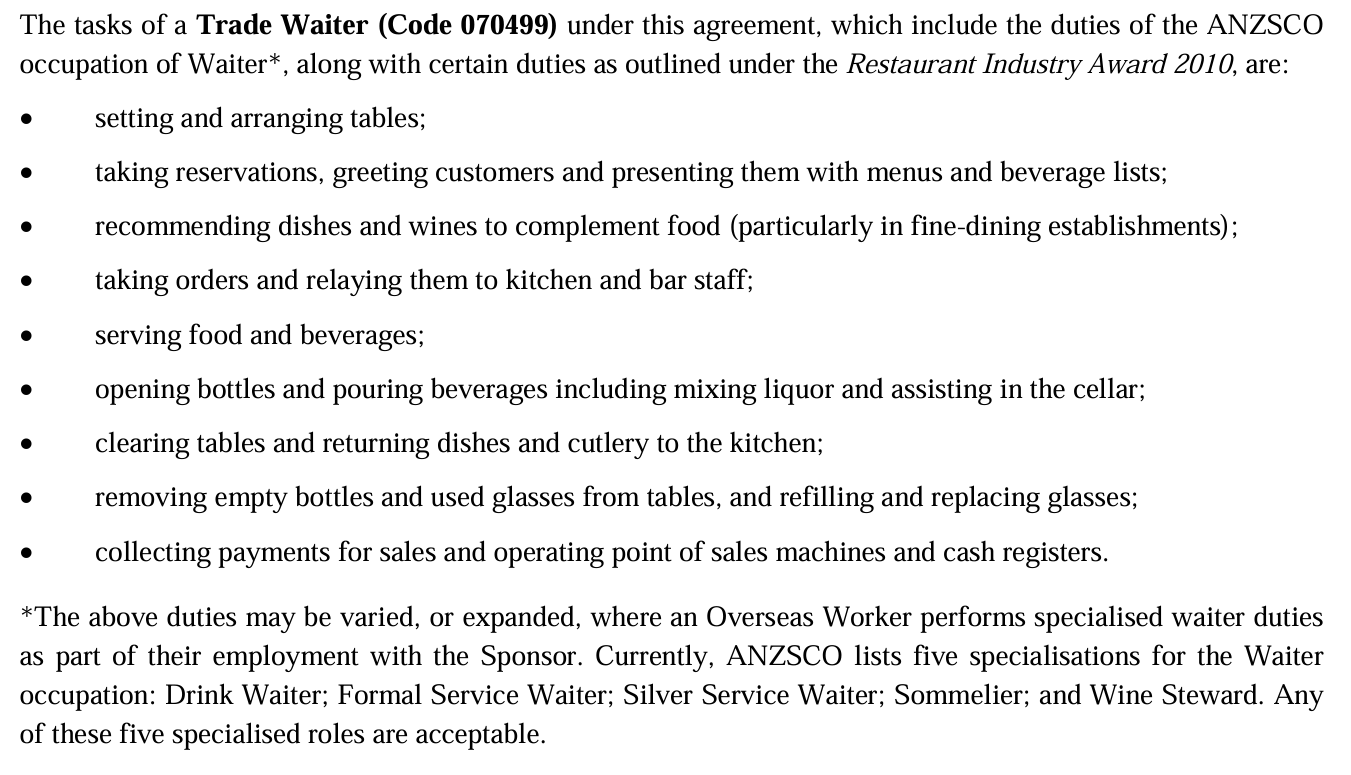
It is designed for:
👉 structured, skilled, premium service positions
Café vs Bakery: Where Do They Fit?
This is one of the most common real-world questions.
Café with a full kitchen → Possible
A café may be a fit where:
it has a real commercial kitchen
food is genuinely cooked (not just assembled)
the team includes chef-level roles
the venue operates at a premium standard
The inclusion of Café or Restaurant Manager is a strong signal that cafés are not excluded.
The catch:
👉 The business still needs to meet Premium Dining criteria
Bakery → Usually unlikely
A traditional bakery is typically a poor fit because:
Baker is not an included occupation
the model is production + retail, not dining
it often does not meet premium dining characteristics
Hybrid bakery-café → Grey area
A hybrid venue may be assessable if:
it runs a full kitchen service
the role is genuinely Chef or Cook, not baking
the venue operates like a premium café/restaurant
Simple takeaway
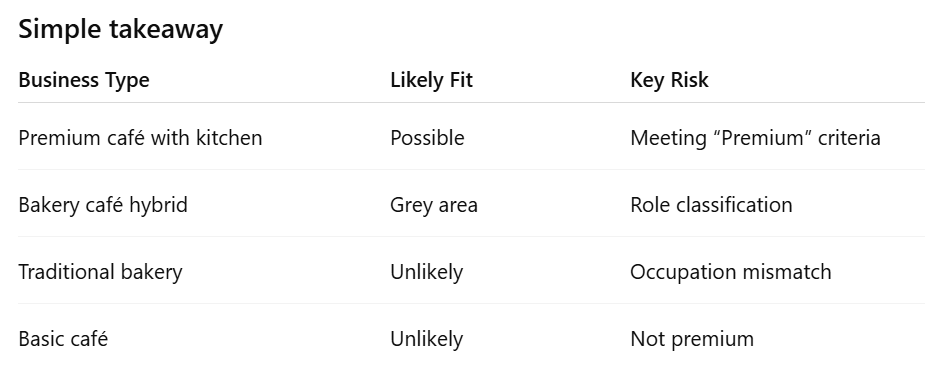
👉 The business model matters just as much as the job title.
Chef vs Cook vs Pizza Maker
This is where many applications fall over - even before they start.
Chef (351311)
higher responsibility
menu input
kitchen leadership
Cook (351411)
more structured role
less responsibility
Pizza Maker
👉 Could be a Chef if the role includes:
dough development
menu responsibility
kitchen management
👉 Could be not a Chef if:
repetitive production
limited scope
How Does ILA Compare to Skills in Demand (SID)?
SID (standard)
broader use
more common
general occupations
ILA Restaurant (Premium)
hospitality-specific
includes Trade Waiter
tailored to premium venues
👉 Think of it as:
SID = general tool
ILA = specialised hospitality tool
How Does It Compare to DAMA?
DAMA
region-specific (and yours may not be included)
may offer flexibility
ILA Restaurant
industry-specific
structured nationally
Key takeaway
👉 DAMA is not the only FOH option (Front of House)
👉 ILA already includes Manager + Trade Waiter
Experience Expectations (Chefs & FOH)
For Chef, Cook and Manager:
👉 No concessions - standard occupation expectations apply
Typical indicators:
formal training
real commercial experience
structured kitchen or service background
For Trade Waiter:
combination of qualification and/or experience
typically aligned with premium service environments
What If Staff Cross Between Roles?
This is normal in hospitality.
A chef might:
run food
speak with customers
help service
That’s fine.
👉 The key is:
The core role must match the nominated occupation
Can Sponsored Staff Transition to Permanent Residency (PR)?
This is one of the most important - and often overlooked - parts of the ILA Restaurant (Premium) pathway.
For many employers, the real goal isn’t just filling a gap for 12 months.
It’s building a stable, long-term team.
The short answer
👉 Yes - this pathway can support a transition to permanent residency (PR) through employer-sponsored options, subject to the relevant requirements being met at the time.
How the PR Pathway Generally Works
Under the Restaurant (Premium Dining) labour agreement, workers may be sponsored:
for a temporary period (up to several years), and
in some cases, for permanent residence through employer-sponsored pathways
A commonly referenced pathway is via the Employer Nomination Scheme (subclass 186), following a period of employment with the sponsoring business.
Typical transition timeframes (general guide only)
Chefs and Cooks → often aligned with a shorter transition period
Trade Waiters and Café/Restaurant Managers → may involve a longer transition period
👉 The exact timing and requirements depend on the specific agreement settings and the applicable visa rules at the time.
Why This Matters for Employers
This is where the ILA becomes more than just a staffing solution.
It supports retention
Instead of constantly restarting recruitment, you can:
bring someone in
train them
integrate them into your business
and potentially retain them long-term
It strengthens your recruitment offer
From a candidate’s perspective:
👉 A role with a potential PR pathway is significantly more attractive than a short-term position.
That can make a real difference when:
competing for skilled chefs
attracting experienced service staff
filling harder-to-source roles
It opens doors for roles that are otherwise limited
For some hospitality occupations, particularly:
Cooks
Trade Waiters
…the ILA may provide access to longer-term pathways that are more limited under standard sponsorship settings.
👉 That can be a major advantage when building a reliable team.
What About Concessions?
One of the reasons labour agreements exist is to provide structured flexibility where standard settings may not fully suit an industry.
Depending on the agreement settings, this may include:
different benchmarks around experience
potential flexibility in certain criteria such as English skills (The best Chefs may not have English as a first language)
pathways that are not always available under standard programs
👉 These settings are defined within the agreement and should always be reviewed carefully.
A Practical Employer Mindset
Rather than thinking:
“How do I fill this role quickly?”
It can be more useful to think:
“If I invest in this person, can they grow with the business?”
That’s where the PR pathway becomes powerful.
It aligns:
your need for stability
the worker’s need for long-term opportunity
Reminder
PR pathways are not automatic and are always subject to:
the rules in place at the time
the worker meeting relevant criteria
the business continuing to meet sponsorship obligations
👉 This is where early planning and good advice make a big difference.
When Is This the Right Pathway?
Best suited when:
the venue is genuinely premium
you need long-term staff
roles align with included occupations
local recruitment isn’t working
Other Options for Front-of-House
Even with this pathway, most businesses use a mix.
Working Holiday Makers
useful for short-term coverage (and may contribute to their 88 days)
can support FOH teams
Local hiring + training
still critical for stability
DAMA (where available)
may offer additional flexibility if needed
Process Overview (High-Level)
Confirm business fits Premium criteria
Define role clearly
Prepare documentation
Complete labour market testing
Lodge nomination
Candidate applies for Visa
Onboard and manage properly
How Long Does It Take?
There are two stages:
labour agreement
visa processing
👉 Expect months, not weeks.
👉 The biggest delays come from:
unclear roles
poor documentation
last-minute planning
Final Thoughts
The biggest shift in thinking is this:
👉 This pathway is not just for chefs
It can support:
kitchen
front-of-house leadership
premium service roles
But the real filter is not the worker.
It’s the business.
Does your venue actually look like a Premium Dining operation?
That’s the question that matters most.
Glossary of Key Terms
ANZSCO – Job classification system
SID – Skills in Demand visa
ILA – Industry Labour Agreement
DAMA – Regional migration agreement
Nomination – Employer role application
LMT – Labour Market Testing
Related Articles
Related Articles that you may enjoy
https://auvisas.au/post/becoming-a-business-sponsor
https://auvisas.au/post/common-visa-mistakes
https://auvisas.au/post/labour-market-testing
https://auvisas.au/post/costperday
Source: AU Visas Employer Guide Series
Disclaimer
The content provided is for informational purposes only and does not constitute immigration or legal advice. It is subject to change. Consult a MARA-registered migration agent or lawyer for professional advice before making any application.
👉 Contact AU Visas today for a professional opinion on your situation. https://auvisas.au/free-consult for business.


