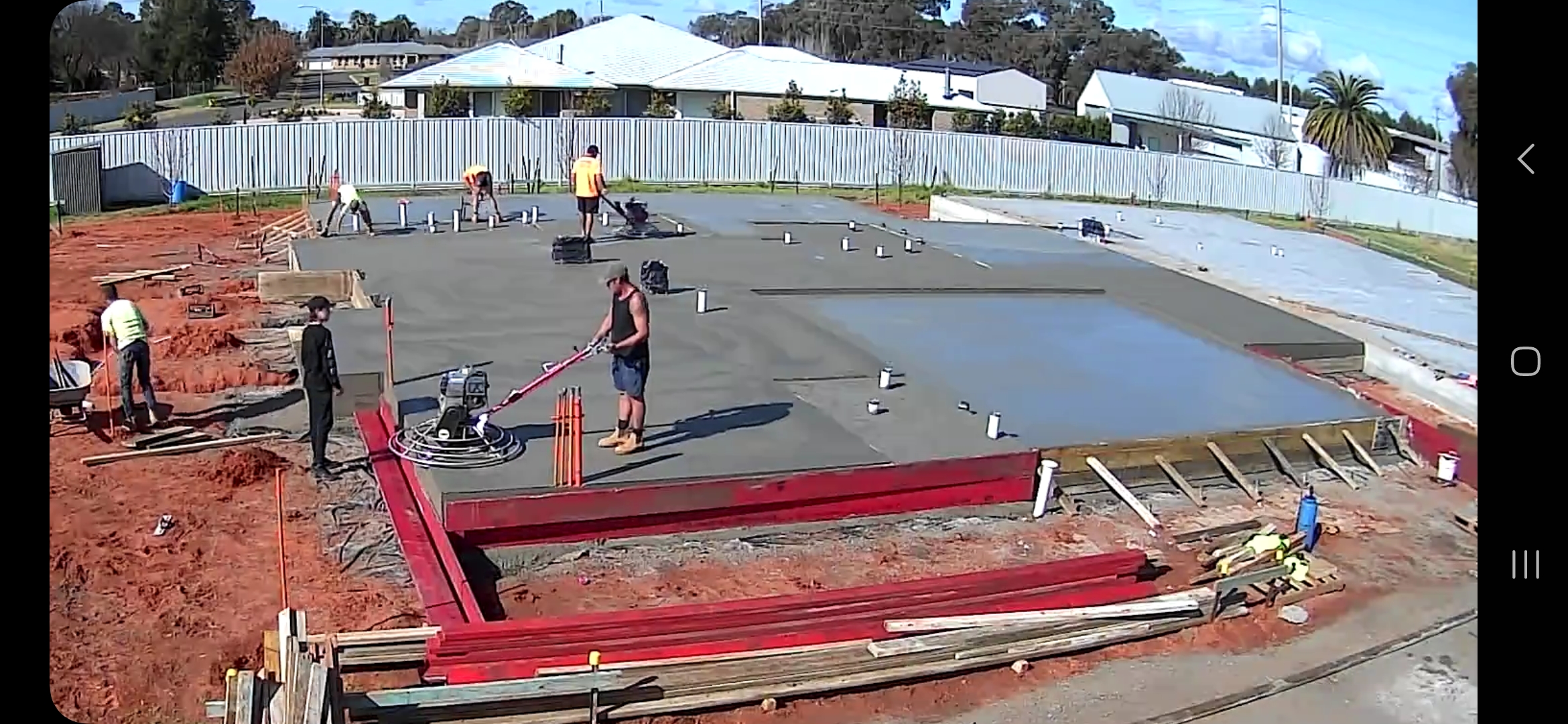
Can Regional Concreting Businesses Sponsor Workers? A Practical 2026 Explanation
If you run a concreting business in regional Australia, sponsorship probably isn’t something you’ve seriously considered.
You may even assume:
Sponsorship is only for big companies
It’s for engineers or office roles
It’s too complex or risky
Or simply not relevant to concreting
In reality, many regional concreting businesses can sponsor - but only if they understand how the system actually views their role.
This article isn’t about paperwork or visas.
It’s about whether sponsorship could ever make commercial sense for a small concreting crew, and if so, what that realistically looks like in 2026.
Why Sponsorship Even Comes Up for Concreters
Most concreting businesses don’t look at sponsorship until one of these things happens:
You’re booked out months ahead but can’t take more work
One key worker leaves and everything slows down
The owner is still “on the tools” because there’s no depth
You’re training labourers but losing them to other crews
At that point, the question becomes:
“If we could find another good concreter, would the business stack up?”
Sponsorship is simply one possible answer to that problem - not a silver bullet.
The Key Reality: You Can’t Sponsor “A Labourer”
This is the most important thing to understand upfront.
Under Australia’s main employer visa (now called the Skills in Demand visa, previously the 482), businesses generally cannot sponsor general labourers with no higher skills.
So if you’re thinking:
“We just need another pair of hands.”
Sponsorship is probably not the right tool.
The One Concreter Role That Does Work
Where sponsorship can make sense is when the role is genuinely skilled.
In 2026, that means focusing on a Skilled Concreter, not a labourer.
This is commonly aligned with:
A trade-level concreter
Certificate III in Concreting or equivalent experience
Someone who can work independently and supervise others
In classification terms, this aligns with:
ANZSCO 371231 – Concreter (Skilled Trade, Skill Level 3)
This reflects how many regional concreting businesses already operate in practice.
What Makes a “Skilled” Concreter Different?
A skilled concreter typically:
Reads and works from plans
Sets out formwork and levels
Installs steel reinforcement
Operates finishing machinery
Supervises labourers or apprentices
Keeps jobs moving without constant oversight
From a business perspective, this is the person who:
Prevents rework
Keeps timelines tight
Frees up the owner to quote, manage, or grow
The Salary Reality (This Is the Hard Floor)
Sponsorship only works if the numbers stack up.
As of 2026, the minimum salary for sponsoring a skilled worker under the Skills in Demand visa is:
$76,515 per year + super
This isn’t negotiable under standard rules.
For many concreting businesses, this is the moment they pause - and that’s sensible.
Sponsorship only makes sense if the role can earn its keep.
A Simple Commercial Way to Look at It
Instead of asking:
“Can we afford sponsorship?”
Experienced owners ask:
“What does one more skilled concreter unlock?”
Hypothetical example:
One extra skilled concreter allows:
2 additional slabs per week
$4,000 profit per slab
That’s roughly $400,000 per year in additional capacity.
Against that, sponsorship costs (<$30,000 to setup) start to look very different.
A Quick Note on Evidence (No Jargon)
For a skilled role:
The worker’s experience must match the role
If they don’t hold an Australian Cert III, a formal skills assessment may be required (We can organise this before you commit.)
A job title alone isn’t enough - substance matters
This isn’t about tricking the system.
It’s about accurately reflecting the work you already do.
What About Other Options? (Briefly)
In some regional towns, DAMA agreements exist that:
Allow salary concessions
Support lower-skill roles
These can be helpful in specific locations - but they’re not universal and involve extra layers.
For most concreting businesses, the cleanest and most predictable option remains the skilled concreter pathway.
Glossary of Key Terms
Skills in Demand Visa (SID) – Employer-sponsored visa for skilled roles (formerly 482).
TSMIT – Minimum salary required for sponsorship.
ANZSCO – Government occupation classification system.
Skill Level 3 – Trade-qualified level reflecting higher responsibility.
DAMA – Regional agreement offering concessions in specific locations.
Related Articles
Related Articles that you may enjoy
https://auvisas.au/post/becoming-a-business-sponsor
https://auvisas.au/post/common-visa-mistakes
https://auvisas.au/post/labour-market-testing
https://auvisas.au/post/costperday
Source: AU Visas Employer Guide Series
Disclaimer
The content provided is for informational purposes only and does not constitute immigration or legal advice. It is subject to change. Consult a MARA-registered migration agent or lawyer for professional advice before making any application.
👉 Contact AU Visas today for a professional opinion on your situation. https://auvisas.au/free-consult for business.


